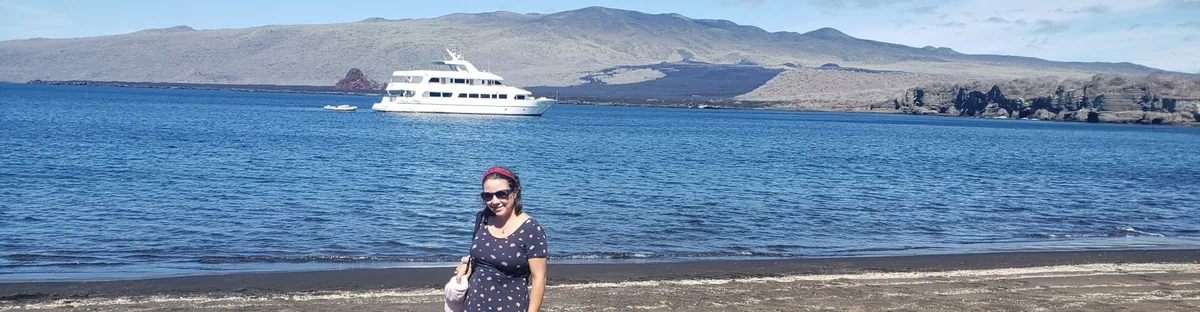
Santiago island: fur seals, lava fields, and a century of human mistakes
Santiago is the archipelago’s great recovery story. Pirates and whalers used it for two centuries, salt miners tried to make a living here into the 1960s, and introduced goats stripped the highlands bare. Today the island is uninhabited, goat-free, and its land iguanas (abundant when Darwin recorded them in 1835, then vanished) were reintroduced in 2019. For visitors it is a central-islands staple: a walk with fur seals and grottos at Puerto Egas, a geology hike on the young lava of Sullivan Bay, and good snorkeling off seven marine sites.
Key facts
- Fourth largest island in the archipelago at 585 km², with a maximum altitude of 907 m; built from two overlapping shield volcanoes.
- English name: James, as in James Bay, which holds the island’s main visitor sites.
- Uninhabited, and home to the largest and longest lava flow in Galápagos: Sullivan Bay’s pahoehoe, formed about 150 years ago.
- Access: cruise itineraries across the central islands stop here, and some Santa Cruz day boats reach its nearer sites. No ferry, no town.
The visitor sites, and what you can do at each
Puerto Egas
The island’s signature site, at the south end of James Bay: a wet landing onto a black-sand beach, then a coastal trail (about 2 km, two and a half hours with stops) over lava terraces where marine iguanas graze, Sally Lightfoot crabs work the tide pools, and fur seals rest in the shaded grottos carved into the rock. This is the most reliable place in the archipelago to see the Galápagos fur seal — the smallest of the eared seals, hunted nearly to extinction for its coat in the early 20th century. A second trail heads inland just under 2 miles to the rim of the “salt mine volcano”, a small cone holding a lagoon that dries in the dry season; salt mining was attempted here several times through the 20th century without commercial success, which is why the site carries the name.
Sullivan Bay
Pure geology. A dry landing onto pahoehoe lava (ropey, braided, only about 150 years old) and a roughly 1.5 km trail (about an hour and a half) across a flow that looks days old but has already begun colonizing: a few pioneer plants, a handful of lava lizards, and paint marks left by the scientists who study it. Little wildlife, and none needed. Kayaking is prohibited here by the park; the visit is a walk plus often a snorkel off the beach.
Espumilla Beach
On the northern side of James Bay: a golden beach that is a green turtle nesting site, with a trail looping through the arid zone where Galápagos hawks circle overhead, and a seasonal lagoon behind the sand that hosts flamingos and ducks.
Buccaneer Cove
The anchorage where 1600s buccaneers careened ships and stocked up on giant tortoise meat; today the steep cliffs above the red-sand beach are stacked with nesting seabirds. Visited by panga along the cliffs.
The marine sites
Santiago has seven official marine visitor sites: Puerto Egas, Albany islet, Piedra Blanca, Cousins Rocks, the Bainbridge rocks, and two more. Cousins Rocks is a diver’s site: a deep wall with seahorses, octopus, black coral, and hammerhead and Galápagos sharks; Albany is a sloping rock dive with eagle rays and the chance of a red-lipped batfish walking across the bottom. Snorkelers usually get their fix at Egas, Sullivan and Espumilla.
Wildlife highlights
Galápagos fur seals in the Puerto Egas grottos (best on the shaded lava at midday, when they retreat from the heat); marine iguanas and lava lizards along the coast; flamingos and white-cheeked pintails at the seasonal lagoons; green turtles nesting on Espumilla’s beach (eggs from January, hatching April to May); and Galápagos hawks riding the thermals inland. Offshore, the deep-water sites bring sharks and rays. Inland, watch the recovery in progress: land iguanas released in 2019 are re-establishing, and tortoises have been returned since 2015.
How Santiago is visited
Central-island cruises stop here almost as a rule: a typical day pairs Sullivan Bay’s lava walk with Puerto Egas, or Egas with Espumilla and Buccaneer Cove. Some Santa Cruz day boats include James Bay sites as part of full-day northern tours; check the exact sites when booking, because “Santiago” day tours vary. There is no land-based visit and no ferry service.
The fixed costs are the usual: $200 park entry for foreign adults paid at the airport on arrival, plus the $20 transit card before your flight, both in the entry fee guide. If you are deciding whether Santiago-type islands argue for a boat, our cruise vs land guide and the best time to visit wildlife calendar are the honest next reads.
Who Santiago is for
- Fur seal seekers: Puerto Egas is the most reliable site in the archipelago.
- Geology-minded visitors: Sullivan Bay is the best young-lava walk reachable on a standard itinerary (Fernandina’s flows are wilder, but require a western cruise).
- Snorkelers and divers: seven marine sites, including Cousins for experienced divers.
- Second- and third-time visitors: Santiago is central-islands material that pairs naturally with Bartolomé and Sombrero Chino.
Last verified: September 2026