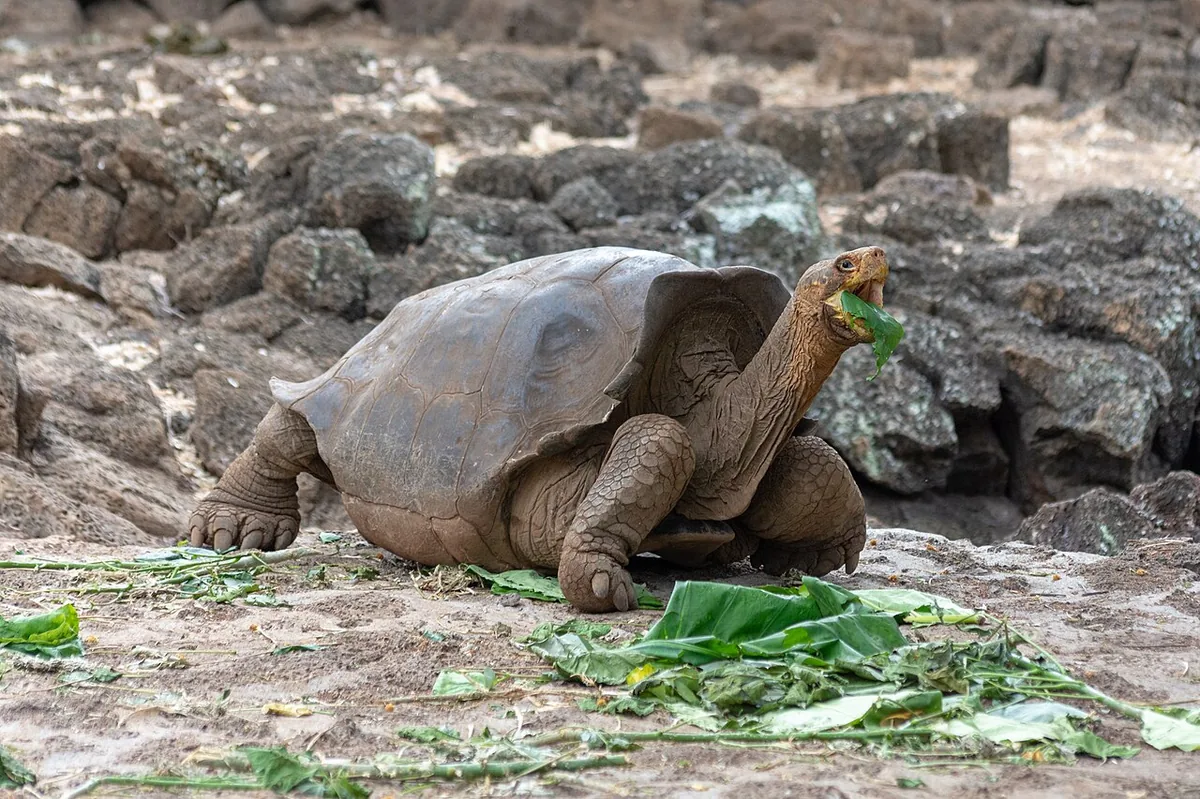
Photo: © Nicolas Völcker (CC BY-SA 4.0) via Wikimedia Commons
El Chato: the giant tortoise reserve in the Santa Cruz highlands
The highlands of Santa Cruz are where the giant tortoise stops being a breeding-centre exhibit and becomes a wild animal in a pasture. El Chato reserve, about 22 km from Puerto Ayora and roughly 20 minutes by taxi, protects native vegetation and the muddy ponds where tortoises congregate, especially in and after the wet season. It is the easiest place in the archipelago to stand a few legal metres from a 200-kilogram reptile going about its day.
What the reserve is
El Chato sits in farm and Scalesia forest country near the hamlet of Santa Rosa, about 2 km south of it on the road from town. The reserve runs across roughly 12 hectares of grassland, ponds and native forest, with two named zones: La Caseta, where the tortoise ponds are, and Cerro Chato, a viewpoint over the island and the ocean. Wild tortoises move between the reserve and the surrounding farms freely; the population you see here is part of the wild Santa Cruz tortoise population that migrates seasonally between the cool highlands and the lowlands. In the June-November nesting season they are heading down to lay; in the wet months they wallow in the ponds.
What you see beyond tortoises
The ponds and forest add birds most visitors would otherwise miss: Darwin finches of several species, vermilion flycatchers, Galápagos rails and barn owls around the fields, and yellow-crowned night herons at the water. Painted locusts and lava lizards cover the paths. None of it hides from you the way mainland wildlife does; that is the Galápagos difference.
The lava tunnels are the bonus: several on the reserve and neighbouring ranches are lit and walkable, and the bigger ones need a stair descent and a flashlight. Ranges like Rancho El Manzanillo and Las Primicias run similar setups on adjoining land, tortoise ponds plus tunnels, and are a fair alternative if El Chato is busy.
How to visit
Three ways, all real:
- Taxi from Puerto Ayora with the driver waiting, roughly 20 minutes each way; simplest, and easy to combine with Los Gemelos on the return.
- Bicycle: the climb from town is real but manageable, and downhill on the way back. Rent a bike with working brakes and take the main road with care.
- A guided highlands tour from town, which bundles El Chato, the tunnels and Los Gemelos into a half-day, typically $20-80 per person plus lunch at a highlands ranch (check current rates).
The reserve’s entrance fee has settled at $10 per person with a guide included (recent visitor reports from 2025-2026 agree; older notes citing $3-5 are out of date), and sensible shoes matter: the ground is mud in the wet season, lava rock everywhere else. Bring rain gear whatever the forecast says; the highlands make their own garúa.
El Chato and the breeding centres, what is the difference?
Visitors mix these up constantly, so: the Charles Darwin Research Station in Puerto Ayora breeds tortoises in corrals for release on islands where populations crashed. El Chato is not that. The tortoises here are wild adults doing what wild adults do, and the reserve protects the habitat they move through. If you want the conservation story, do the station; if you want the animal in its landscape, do El Chato. Most trips should do both, and our Puerto Ayora guide sequences them.
Half a day covers El Chato well, and it is the one excursion from Puerto Ayora we consider essential rather than optional. For tours and cruises across the archipelago, Galapagos Dana Tours works with every major operator. And after the islands, our cloud forest hotel in Mindo, Las Terrazas de Dana, keeps the green theme going at a slower pace.
Last verified: September 2026