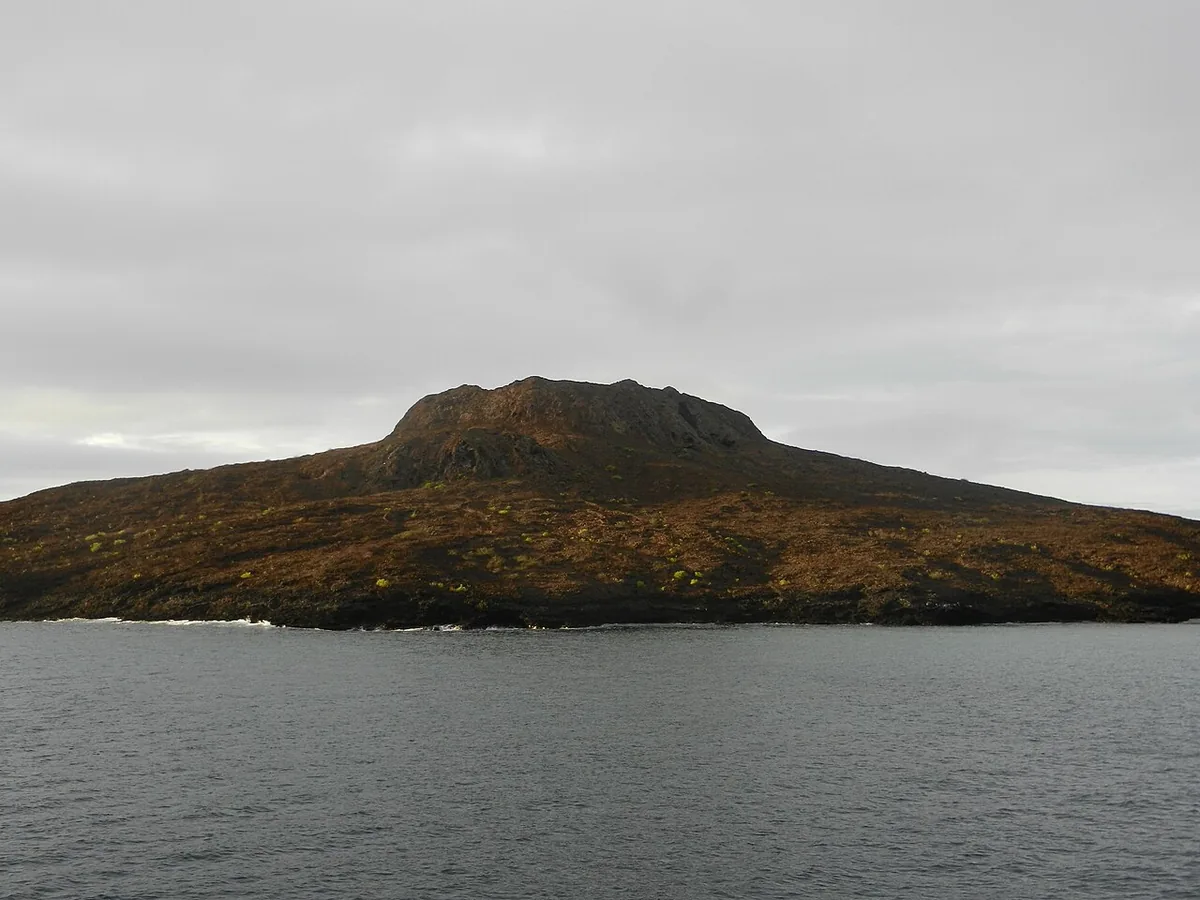
Chinese Hat island: a perfect cone and a protected channel
Chinese Hat, Sombrero Chino in Spanish, is a tiny islet shaped exactly like its name: a volcanic cone with a sandy crescent at its base, sitting just off the southeastern coast of Santiago. It is a small, harsh, beautiful landscape of fresh lava and volcanic rubble, and its protected position behind Santiago gives it calm water and good snorkeling within sight of the lava fields. You will not find it on every itinerary; you will remember it if you find it on yours.
Key facts
- Area of 0.39 square miles (about 1 square kilometer), uninhabited.
- Geology: a spatter cone, born of a volcano on Santiago, a small offspring of a much bigger neighbor.
- Access: cruise only, on northern itineraries. The island is reached by wet landing on its beach; no day-tour infrastructure exists here.
- Only small yachts are permitted, a park measure to protect the site from erosion.
- A single visitor site with one trail of 0.3 miles (0.45 km).
The walk
From the wet landing, the trail crosses the lava fields at the cone’s base. It is not a long walk, and that is the point: the landscape is the attraction, a hard, raw reminder of what these islands looked like before vegetation took hold. Along the way look for lava lizards and the candelabra cactus pushing up through the black rock. The trail ends at a viewpoint overlooking Santiago and, on a clear day, Bartolomé across the channel.
The beach at the landing is a colony of bachelor sea lions: adolescent males without a harem, exiled from the breeding beaches until they are strong enough to challenge a dominant bull. They spend their days wrestling and dozing, which makes them excellent, unbothered company for snorkelers.
Snorkeling: the calm-water advantage
Chinese Hat’s position, sheltered by Santiago, gives it unusually calm water for the central archipelago, and the snorkeling rewards it: white-tipped reef sharks resting in the shallows, sea lions weaving through the group, green turtles cruising the edge, and occasionally a Galápagos penguin in the water. Tropical fish gather in good numbers, and a variety of sharks and rays rounds out the session.
The canal between Santiago and Sombrero Chino is also listed among the manta corridors of the central islands; keep an eye on open water between the shore and the lava. For the broader picture of what snorkeling in Galápagos involves, see our snorkeling guide.
When to visit
Chinese Hat is a year-round site, and the only penguin note in the source notes marks it as an occasional sighting in the water. The cool season (roughly June to November) brings richer marine life with the cold currents; the warm season trades that for warmer, clearer water. Wildlife density, not weather, is what changes month to month.
How to visit
By cruise, on northern itineraries that also take in Santiago’s shoreline, Bartolomé and often Genovesa. Only small vessels are permitted here, which sets the tone of the visit. Fixed costs still apply: the $200 park entry for foreign adults and the $20 transit card, detailed in the entry fee guide. If Chinese Hat sounds like your style of island, our how many days guide and the cruise vs land guide will help you pick the trip format that actually reaches it. Santiago’s big-neighbor sights (Puerto Egas, Sullivan Bay and Espumilla Beach) are summarized in getting your bearings.
Last verified: September 2026