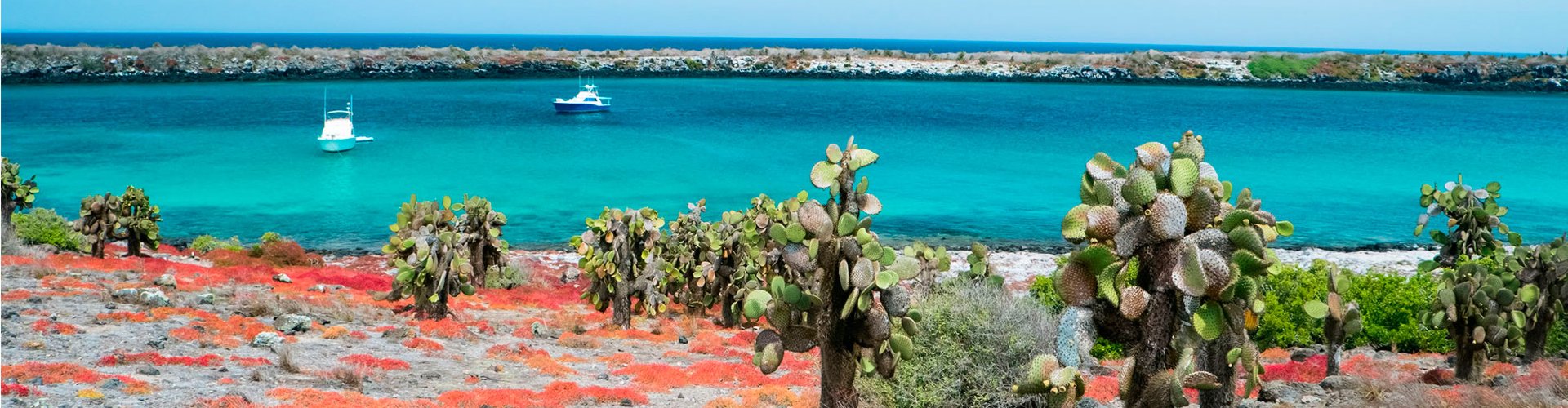
Santa Fe island: the oldest island, and its own iguana
Santa Fe sits in the middle of the archipelago and yet feels off the main track: no town, one visitor site, and a species found nowhere else on earth. The rocks below its waterline date back nearly four million years, making it one of the oldest islands in Galápagos. Its reward for visitors is Barrington Bay: a turquoise cove with a sea lion colony, a forest of the tallest Opuntia cacti in the islands, and the pale Santa Fe land iguana, which lives only here. It is one of the classic day tours from Santa Cruz and a frequent stop on central cruises.
Key facts
- Area: 24 km², highest point about 850 ft (260 m). Small and flat-ish, and independent: Santa Fe was never part of any other island’s volcano.
- One of the oldest islands in Galápagos: underwater rock dating puts its formation at almost 4 million years (4 to 4.5 million by other counts), and it formed by uplift rather than by a volcano building above the surface.
- English name: Barrington, as in Barrington Bay.
- Its own giants: the Santa Fe land iguana (Conolophus pallidus), a paler, longer-snouted cousin of the land iguanas elsewhere, plus an endemic rice rat and its own marine iguana and lava lizard subspecies. The island’s giant tortoise was hunted out in the 1800s.
- Access: 40 to 60 minutes by boat from Santa Cruz; reachable by day tour, land-based tour, or cruise. No ferry, no town, no overnight stays.
The visitor site, and what you can do at it
Barrington Bay
One wet-landing beach, two trails. The short one follows the shore and the sea lion colony into the Opuntia forest — these cactus trunks are the thickest in the archipelago, and the iguanas wait beneath them, sometimes directly under the cacti whose pads they eat. The longer trail climbs to the cliffside for views over the bay (about 2.5 km round trip). Snorkeling happens off the beach and along the rocky edge: sea lions, turtles, rays, and occasionally Galápagos sharks. The bay’s calm water makes it a forgiving site for mixed groups, and it is one of the few sites where the snorkel start is a step off the beach.
Wildlife highlights
The Santa Fe land iguana is the headline and the reason birders and list-keepers keep coming: it is pale gold and distinctive, and it lives nowhere else. Around it: the resident sea lion colony (bachelor males often patrol here), green turtles in the bay, Galápagos hawks overhead, the endemic Santa Fe rice rat (one of only a handful of surviving native rodent species, and easier to see here than anywhere), mockingbirds and Darwin’s finches in the cactus forest, and the island’s own marine iguana subspecies on the rocks. Underwater: sea lions that come to play in the snorkel group, rays on the sandy bottom, and occasionally whitetip sharks near the rocks.
How Santa Fe is visited
Three ways, all by water. Day tours from Puerto Ayora run most days in season (about an hour’s navigation, then beach, iguanas, and snorkel before lunch), often paired with South Plaza on a full-day itinerary. Land-based travelers can charter or join a boat from Puerto Ayora, making it one of the standard day trips alongside Bartolomé and North Seymour. Cruises on central itineraries stop as a morning site. Divers know the nearby Fondeadero as one of the archipelago’s few night-dive sites, with fluorescing plankton and playful fur seals.
Fixed costs are the usual: $200 park entry for foreign adults paid on arrival at the airport, and the $20 transit card before your flight; the entry fee guide has every category. Day tour pricing sits on top; our cruise vs land guide covers how day trips fit a land-based plan, and the best time to visit calendar shows sea lion and iguana seasons.
Who Santa Fe is for
- Day-trip travelers from Santa Cruz: close and calm, with big payoff in half a day.
- Anyone collecting endemics: the pale iguana and the rice rat exist only here, and the iguana is genuinely easy to see.
- Snorkelers who prefer a beach start to a deep-water entry.
- Families: short navigation, a protected bay, and sea lions that behave like a welcoming committee.
- Not for: hikers wanting a big walk (the trail is short), or birders chasing albatross and rare seabirds; Genovesa and Española do that work.
Last verified: September 2026