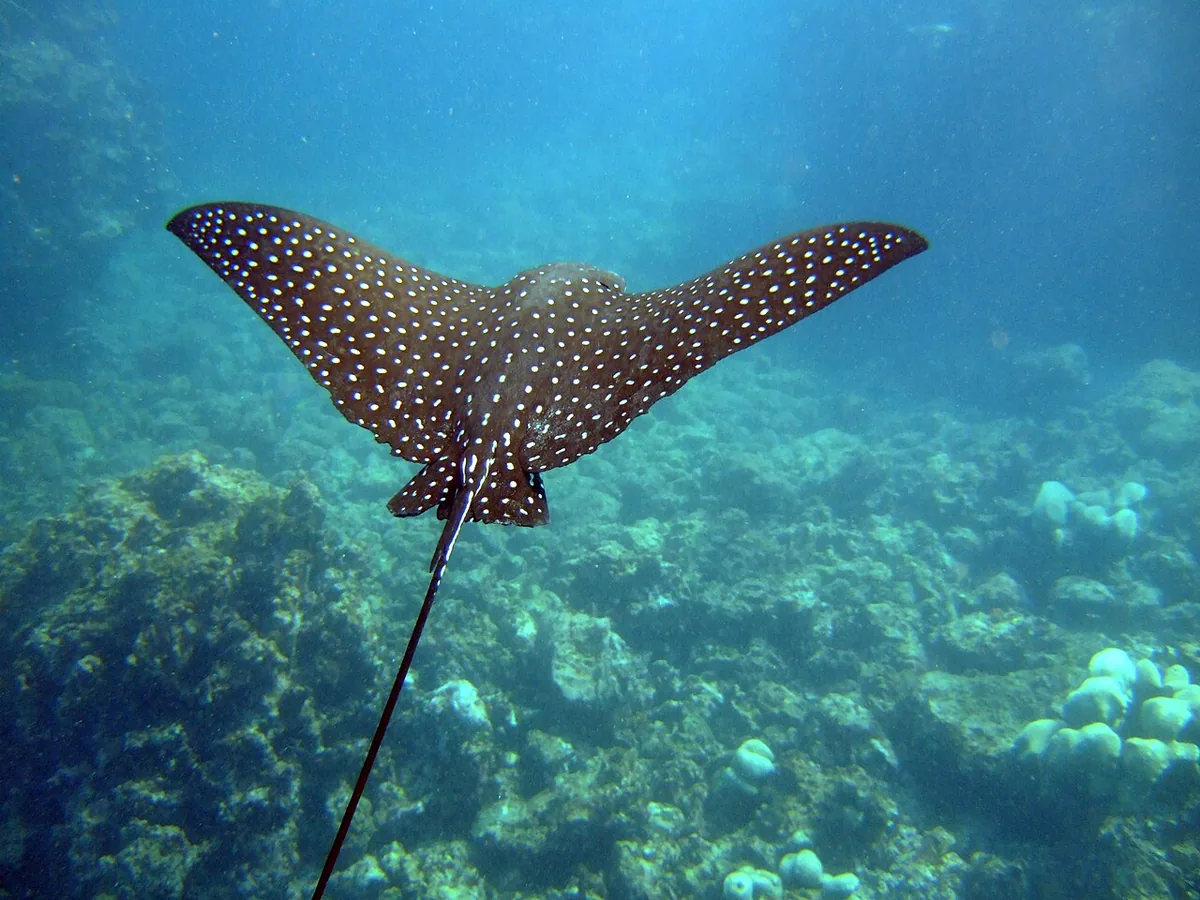
Photo: john norton (CC BY 2.0) via Wikimedia Commons
Rays of Galápagos
The Galápagos Marine Reserve hosts at least 50 shark and ray species combined (more than 30 of them rays), from football-sized stingrays in the shallows to six-meter mantas at offshore cleaning stations. Most snorkelers meet at least one without trying. This page covers the three headline groups - manta, spotted eagle ray and the mobulas - with the sites that actually produce them.
Giant manta ray
The giant manta (Mobula birostris) is the big one, up to 7 m across, with large adults topping 1,000 kg (the heaviest recorded individuals approach 2,000 kg), filter-feeding on plankton and easy to tell apart from its relatives by the two cephalic fins that curl like horns, the origin of the old “devil ray” name. It is listed as Endangered by the IUCN (2019). It is the smartest fish in the sea by brain-to-body ratio, and each individual’s belly markings are unique, which is how researchers track them.
The densest feeding gatherings anywhere in the world happen off Galápagos and mainland Ecuador. In the archipelago, the hotspot is Cabo Marshall on the northeast coast of Isabela, nicknamed the City of Mantas: plankton-rich water with low visibility, which is exactly what a filter feeder wants and exactly what a photographer grumbles about. Snorkelers and divers also find mantas around North Seymour, the channel between Santiago and Sombrero Chino, Tortuga Islet off Floreana, and at Gordon Rocks, Daphne and Beagle on dive trips.
Spotted eagle ray
The elegant one, dark above with white spots, usually seen cruising in loose formation over sandy bottoms. Reliable sites include Española, Elizabeth Bay, Black Turtle Cove, Daphne Minor, North Seymour and Gordon Rocks, and divers off Albany and Pinzón meet them regularly along the drop-offs. They swim alone or in schools, and like the manta they are harmless as long as you keep two meters and let them steer. Listed as Endangered by the IUCN (2021 global assessment).
Mobula (devil) rays
Two mobula species pass through regularly: the giant manta’s smaller cousin Mobula japanica, the spinetail mobula (listed Vulnerable by the IUCN as Mobula japanica in 2006 and folded into the Endangered Mobula mobular complex in the 2020 re-assessment), alongside the mantas themselves. The signature behavior is the leap: mobulas throw themselves clear of the water, sometimes flipping, in displays thought to relate to communication, courtship or shaking off parasites. From a boat deck, a synchronized mobula breach is one of the strangest and best things you will see here.
Rays you will meet by accident
- Stingrays rest on sandy shallows - the shuffle-step your guide teaches in ankle-deep water exists for them, though injuries are rare. Some reach 1.5 m across.
- Golden rays school in quiet lagoons and glide past divers at Albany.
- At night on the Puerto Ayora pier, dock lights draw fish, and rays - along with sharks - glide under the planks below.
When to come
Ray sightings are possible year-round, but the easiest viewing runs December to May, the warm season, when visibility is at its best. The dry season concentrates mantas’ food and the big animals move accordingly, which trades numbers for murk. Our wildlife calendar breaks the trade-off down by month, and climate notes in the best time to visit guide explain why visibility swings so much.
Rays share their sites with the reserve’s sharks - see the sharks guide and hammerhead pages - and the wildlife calendar shows which months pair ray watching with the clearest water.
Last verified: September 2026