Galápagos photography: gear, settings and the rules
Galápagos is the easiest hard photography you will ever do. The animals fill the frame at two metres, because that is the park rule and they simply do not flee. The difficulty is not access; it is salt spray, hard equatorial light, fast-moving birds and knowing when the light is on your side. This page is the gear-and-settings guide we give guests before they go.
The light, by season
Two regimes, and they change your whole approach:
- Warm season (December–May): sun most days, harsh midday light, water clear and blue for underwater work. Golden hour comes fast; the sun sits nearly overhead at noon, so shoot early and late and plan midday for mangroves and forest shots.
- Dry season or garúa (June–November): overcast mornings in the highlands, softer light, dramatic wave and bird action at sea. Cloud cover is a gift for animal portraits; it is harder for the classic blue-water wildlife shot.
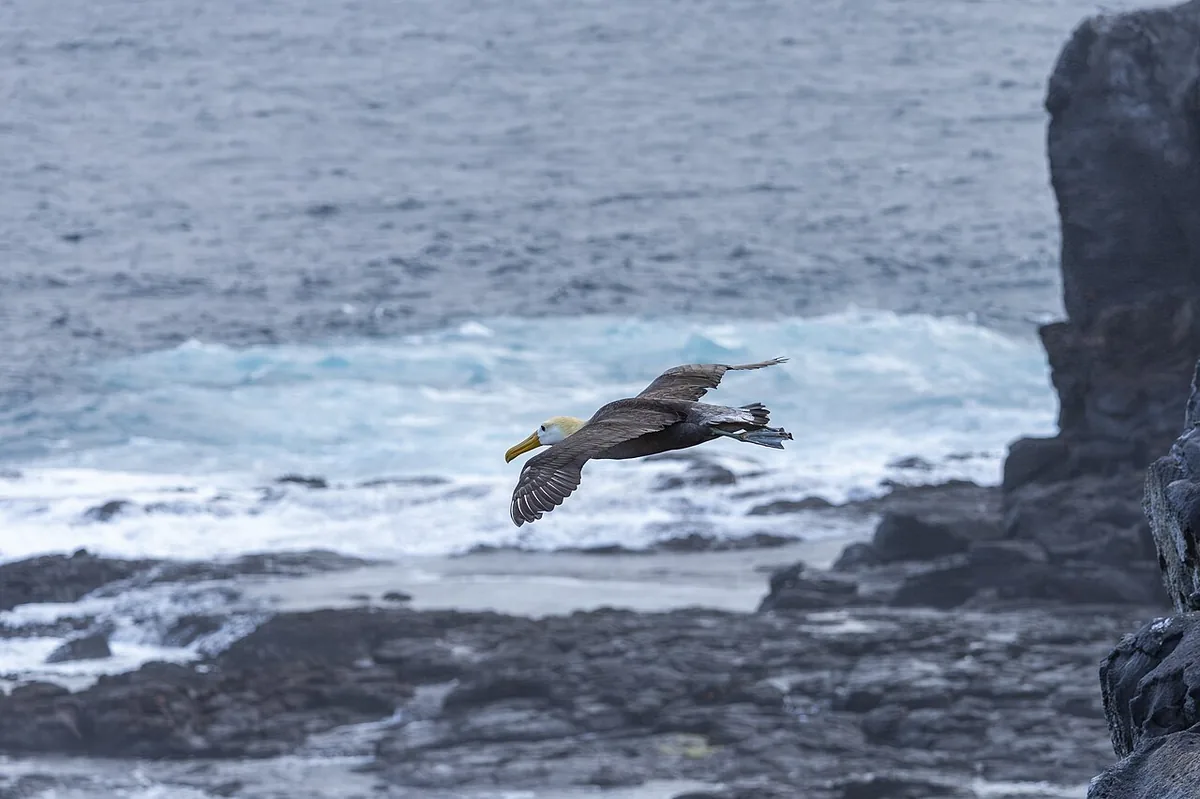
The wildlife calendar decides subjects: albatross courtship April–June, sea lion pups from August, penguin courtship September–December at Bartolomé, turtle nesting December–March. Our month-by-month guide maps it.
Gear that earns its space
- A telephoto in the 100–400 mm range covers 90% of the trip. The two-metre rule plus fearless animals means 400 mm is plenty; 600 mm mostly stays in the bag on a small boat.
- A weather-sealed body or good rain cover. Salt spray on pangas is real, and landings are wet.
- One polariser for the water and lava (it cuts glare off the surface and saturates the green against black), and that is the whole filter kit.
- Underwater: even a GoPro changes your trip. Most boats and day tours rent GoPros; serious snorkellers bring a housing. Underwater in the warm season, ambient light is enough; in the garúa months, shallower is better.
- Duffel, not hard case, for domestic flights; the inter-island ferries and small planes are hard on hard cases.
Settings that work here
- Birds in flight (frigates, boobies, pelicans): shutter priority around 1/2000s, continuous autofocus, burst on. The light allows it most of the day.
- The midday problem: drop exposure compensation about a stop so white feathers and sand do not blow out; underexpose and lift later.
- Underwater: get within a metre or two, since water eats colour and contrast; use the camera’s underwater mode or manual white balance, and shoot upward-sun for silhouettes of turtles and penguins.
- Landscapes: the lava is brightest 10:00–15:00. The Sullivan Bay and Sierra Negra shots that work are early light or garúa mood.
Small boats are the photographer’s friend. With 16 guests instead of 90, nobody fights for the rail position, and guides who know photographers will hold the panga for the shot. If you are choosing a boat partly for photography, ask about the guide ratio; some luxury boats run two guides, which doubles the shooting angles.
The rules that shape the shots
- Two metres from wildlife, and that includes the lens. No lens pokes closer than two metres.
- No flash, full stop. Flash photography is prohibited in the park.
- Drones are effectively banned for visitors: recreational flying is prohibited everywhere in the archipelago. Only research, monitoring or approved documentary projects get flights, and even a DGAC (civil aviation) permit is void without separate authorization from the Galápagos park directorate — for professional shoots, apply to the DPNG (and the government council) at least two months ahead. Carrying one in is tolerated; flying it is not.
- No moving animals, eggs or nesting material for a better frame, and no baiting or calling.
- Professional commercial photography and filming require separate DPNG authorization.
The upside of these constraints: they are why the photos work. A booby that has never been chased lets you frame it against the lava at f/5.6, and the iguana you almost stepped over (careful where you put your tripod) fills the frame at 100 mm.
A practical shooting plan
Days on a cruise give you two landings and usually a panga ride; plan the long lens for the landing, the wide or mid zoom for the landscape on the walk, and the underwater kit for the snorkel. The single best “money” shot of most trips is a panga ride along a mangrove or cliff line at golden hour with the guide killing the engine. Ask your guide when that is scheduled; good guides know.
Last verified: September 2026