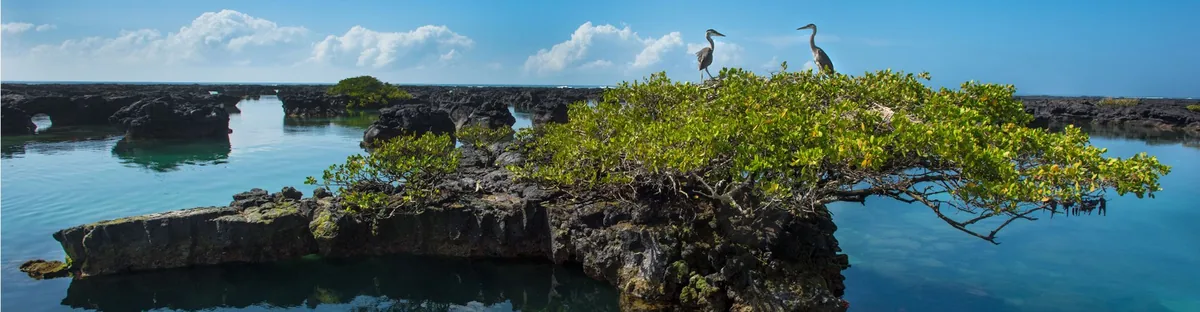
Galápagos in January
January is where the calendar turns over twice in Galápagos: the new year for you, and the start of the warm, wet season for the islands. Days run hot and mostly sunny, the sea sits at its calmest, and the beaches get busy in the best possible way - with female green turtles hauling out at night to nest. If you want the islands green, the water warm, and the wildlife calendar in full nesting mode, this is a strong month to come.
Weather in January
Air temperatures average 29°C for the high and 22°C for the low. The warm season is properly underway, so expect sunny mornings and short, sharp afternoon showers that pass quickly rather than ruining a day. Rain is real but brief - you plan around it, not because of it.
Sea conditions in January
The sea is calm. This is one of the quietest months of the year for surface conditions, which makes it a good pick if you’re prone to seasickness or traveling with kids. Water temperature sits around 23°C by the operators’ averages; satellite readings of the surface at Puerto Ayora run warmer, around 25°C. The gap matters: what you feel at snorkel depth is usually closer to the cooler figure, but most visitors swim comfortably without a wetsuit in January. If you chill easily, a shorty is enough.
For divers heading to Darwin and Wolf, January is arguably the best month for scalloped hammerheads at those far northern islands - warm water, good visibility, and big schools.
Wildlife in January
The warm season turns the islands’ attention to the land and the beaches:
- Green sea turtles nest. January through March is peak nesting, and you can spot the fresh tracks females leave on beaches like Bachas on Santa Cruz. Guides will show you the difference between a nesting crawl and a returning track.
- Marine iguanas turn colorful. On Española, marine iguanas come into breeding condition, and the males take on green and red breeding coloration - the so-called “Christmas iguanas.” (Color change is actually at its most striking in December–January.)
- Land iguanas breed on Isabela. The breeding season gets going as conditions improve.
- Land birds nest after the first rains. The first rains trigger nesting for Darwin’s finches and other land birds - and the finches get noticeably more active and visible.
- Giant tortoise eggs hatch. Hatching of giant tortoise eggs runs at this time of year, though in the wild you’re more likely to see hatchlings at a breeding center than on a trail.
Note that waved albatross are absent from Española until April - don’t plan an Española day trip in January expecting them.
Who January is good for
- Beach-and-snorkel travelers. Calm seas, warm-ish water, turtles coming ashore at night. Good combo.
- Divers targeting Darwin and Wolf. Hammerhead schools at their best.
- Photographers. Breeding colors on the iguanas, green highlands, dramatic skies after the showers.
- Families. Calm crossings and warm air make boat life easy.
Who should think twice
- If you hate humidity, the warm season may feel heavy - January is warm and humid by Galápagos standards.
- If your one non-negotiable is the waved albatross, wait until April or later.
- If you want the roughest-sea avoidance question moot, January is actually fine - the concern is more about crowds in the first week of January, when holiday demand is high and boats and flights fill up.
Booking advice
January splits in two: the first week or so is peak holiday demand, then things regular out. Book flights and boats early if you’re traveling over New Year; for mid-January onward you have more room, but the best boats on the best itineraries still sell out months ahead. Remember the entry formalities: the $20 transit control card (TCT) is paid before your flight, and the park entrance fee is $200 for foreign adults, collected on arrival at Baltra or San Cristóbal. See our guide to entry fees and, if you’re still deciding between a boat and a hotel-based trip, our cruise vs land-based comparison.
Last verified: September 2026