Galápagos in April
April is the last full month of the warm season, and it might be the best all-rounder of the year. The albatross are back on Española and mid-courtship, green turtle and land iguana hatchlings are emerging, the sea is calm and clear, and air temperatures have eased a degree or two from March’s peak. You get the warm season’s wildlife highlights without its very hottest, wettest extremes.
Weather in April
Air averages 30°C high / 22°C low. The rain begins to tail off compared with March, though you’ll still see warm-season showers. Days are mostly sunny; the landscape stays green from the wet months. Honestly, April is what people picture when they imagine “tropical but not oppressive.”
Sea conditions in April
Calm sea and the best underwater visibility of the year - the warm Panama current water is clear and settled. Water temperature is around 24°C by operators’ averages; satellite surface readings at Puerto Ayora average 26.4°C. Most snorkelers are comfortable without a wetsuit, though on longer snorkel sessions a shorty keeps you warm. The north-swell risk from March fades through April, but it can still linger early in the month on itineraries with northern coastages.
Wildlife in April
April’s wildlife calendar is stacked:
- Mass waved albatross courtship on Española. The whole population is back by April, and Punta Suárez hosts the world’s only nesting colony. The courtship choreography - the bill-circling and the clacking - peaks now. This is the single best reason to visit in April, and the colony remains through the dry season.
- Green sea turtle hatching (April–June). Turtle eggs laid in January–March start producing hatchlings that scramble for the sea. On beaches like Bachas on Santa Cruz and Punta Cormorant on Floreana, you’ve got a real chance of seeing the mad dash - with the sobering footnote that only around 1% of hatchlings make it to adulthood.
- Land iguana hatchlings on Isabela. Eggs laid months ago hatch now, so young iguanas appear in the Isabela breeding areas.
- End of giant tortoise hatching. The hatching season that began months earlier wraps up.
Who April is good for
- Birders. Albatross courtship is the headline, but land birds stay active and the colonies are noisy.
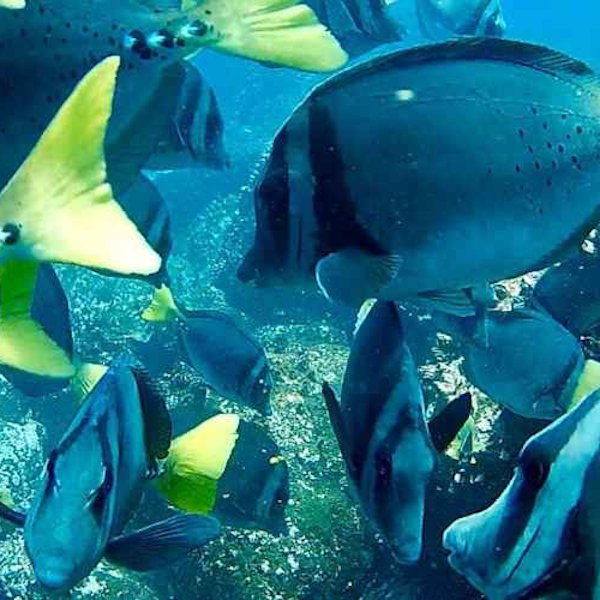
- Snorkelers. The warmest-calmest-cleariest stretch of sea - if you measure a trip by hours in the water, April is a top pick.
- Families and first-timers. Calm crossings, warm air, hatchlings on the beaches.
- Photographers. Courtship displays plus hatchling dashes to the sea.
Who should think twice
- Albatross-only travelers arriving early in the month. If you land April 1st and leave April 4th, you’re gambling that the very first arrivals coincide with your Española day - they’re all back by mid-April, so book the second half of the month for certainty.
- Easter travelers. When Semana Santa falls in April (it usually does), Ecuadorian demand spikes, flights fill, and domestic tourists add pressure on hotels. Book well ahead or shift dates.
- Heat-haters. It’s still the warm season; 30°C with humidity is normal. If that sounds heavy, the dry season starts in June.
Booking advice
April splits around Semana Santa: the week itself books out early with domestic travelers, the shoulder weeks are quieter. Reserve boats and flights two to three months out as a baseline - longer if Easter is inside your dates. Española-inclusive itineraries are the ones to ask for. Before you book, skim our best time to visit Galápagos overview to see how April compares with the rest of the year, and our guide to entry fees for the $20 transit card and $200 park entry you’ll budget on top of the cruise.
Last verified: September 2026